15.12.2025
Special Report
40 Years of the Master’s Program in Information Systems: 40 Years of Transformation
“The Internef has changed little, but the field itself has been profoundly transformed.”
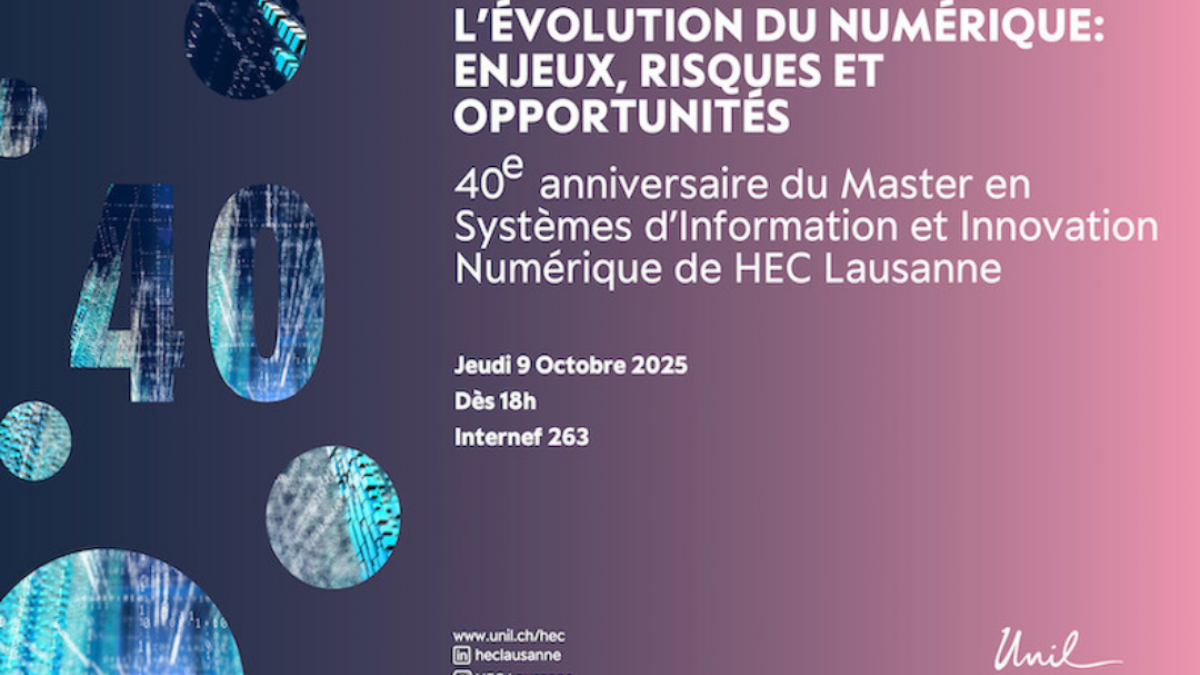
With these words, Thibault Estier opened the celebration of the 40th anniversary of the Master’s program in Information Systems and Digital Innovation at HEC Lausanne, launching the conference with a retrospective on the evolution of the discipline.
In 1984, at a time when computers were still the realm of pioneers, Professors Munari, Probst, and Bonzon—already convinced that management information systems would revolutionize companies—laid the foundations of the program. They were later joined by Yves Pigneur, a leading figure in the field, and Solange Ghernaouti, both of whom would leave a lasting mark on the department.
Since its launch, the master’s program has undergone several reforms and has accompanied each major stage of the digital and technological transformation. Among the most notable initiatives in its recent history is the Digital Innovation Week, launched in 2012: an intensive one-week workshop during which MScIS students collaborate with companies to tackle concrete challenges related to digital technologies and innovation.
The year 2025 marks a major achievement, as the master’s program is ranked among the five best European programs in the field of information systems. This jubilee perfectly symbolizes the program’s ability to remain relevant in a world where technology is constantly reinventing itself.
Thus, “the master’s program does not train for a job, but for a way of thinking”—a way of thinking at the intersection of technical, analytical, and managerial logic. This approach is reflected in the diverse career paths of its alumni, who, from auditing to pharmaceuticals and large-scale retail, have carried the program’s teachings far beyond the campus.
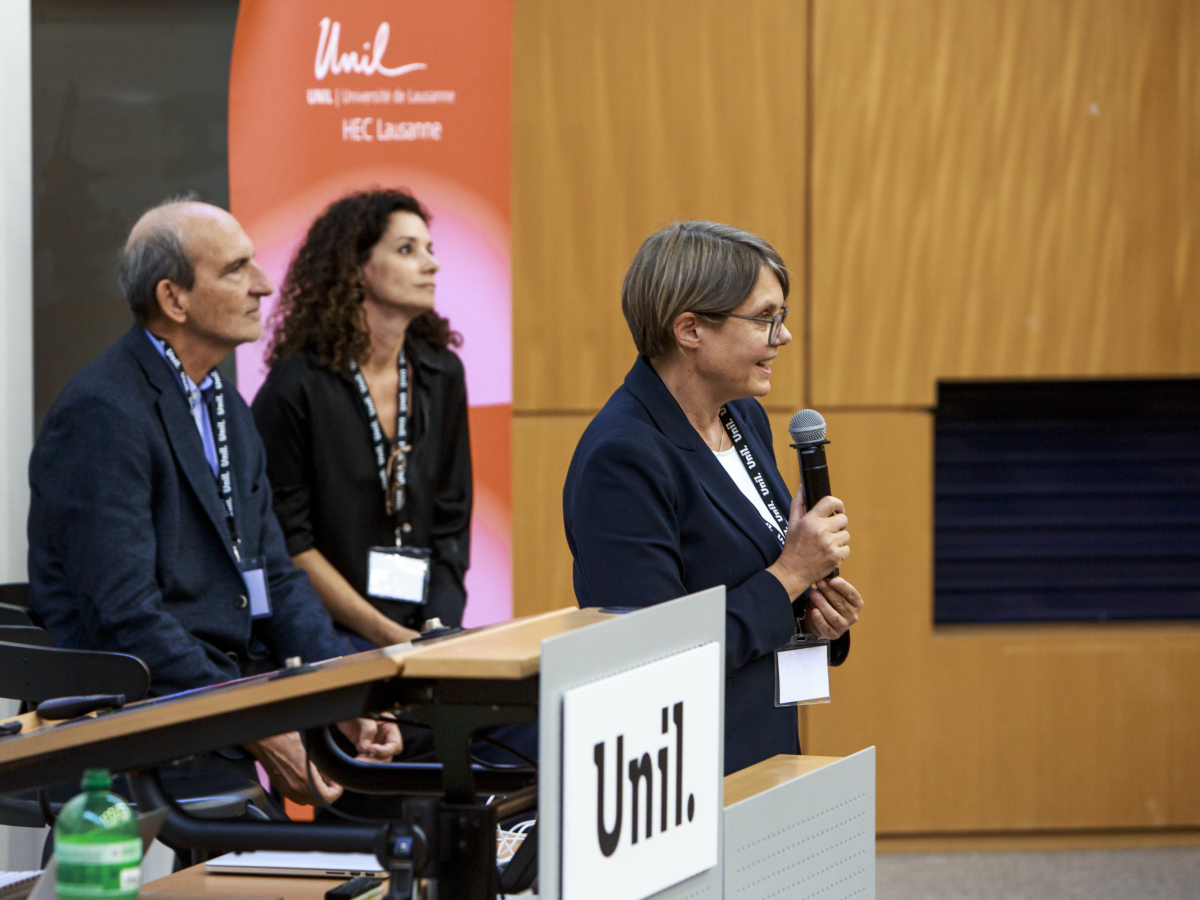
Photo: Sébastien Monachon
Joe Peppard: Implementing AI — A Story That Repeats Itself?
How can one talk about innovation without addressing the most pressing topic in digital technology today: artificial intelligence?
On this subject, the guest of honor, Professor Joe Peppard (University of Dublin), raised a provocative question: “Why do we believe that artificial intelligence will produce a different outcome from previous technological revolutions?”
According to him, AI will not have the disruptive effect on the economy that its developers predict. He referred to the 1980s, the era of IBM PCs, the Apple II, and the early days of the information systems master’s program. The arrival of personal computers was supposed to radically boost productivity. Yet, as economist Robert Solow pointed out at the time through his productivity paradox, “you can see computers everywhere except in the productivity statistics.” Even today, the impact of digital technologies on productivity remains debated, and the real effects of IT development are difficult to measure.
For Peppard, we are experiencing the same paradox with artificial intelligence today: billions are being invested, but tangible benefits are slow to appear. He attributes this to a set of deeply rooted orthodoxies: the separation between IT and business, the tendency to view information technologies as a cost rather than an investment, and technical decisions too often delegated without fully understanding their implications.
The integration of AI, like any innovation before it, is not primarily a technical or logistical challenge, but above all a managerial one.
His proposal is radical: “We must stop thinking of technology as a thing and start seeing it as a verb.” In other words, it should be considered a living component of the organizational fabric—a process in which every decision influences company performance.
Peppard concluded his talk by quoting George Bernard Shaw: “Progress is impossible without change, and those who cannot change their minds cannot change anything.”
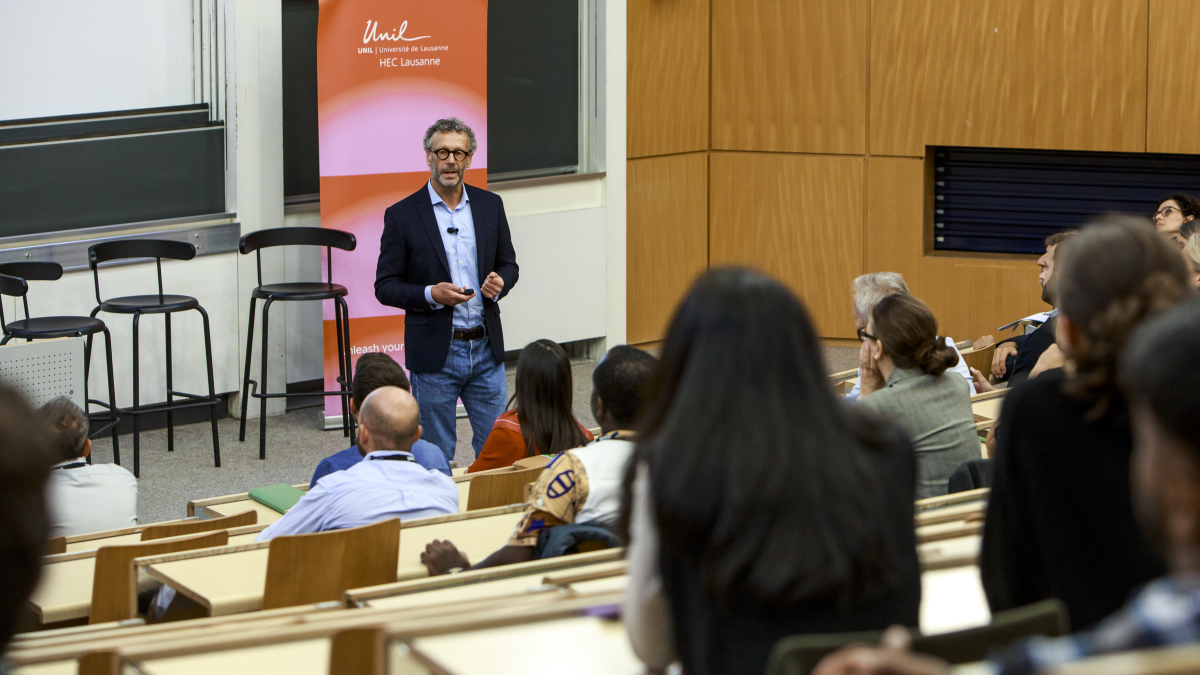
Photo: Sébastien Monachon
Alumni with Emblematic Career Paths
The conference continued with a series of testimonials from former students, illustrating the diversity of career trajectories offered by the master’s program.
Valeria Pelosini, now Head of IT Products for Marketing and Sales at Bobst, described the digital transformation of an industrial giant through the Bobst Connect platform, which optimizes machine maintenance, quality, and energy consumption. She echoed Peppard’s vision, stating that “the greatest challenge remains the integration of the multiple cloud systems required for our digital ecosystem.” The dual skill set of MScIS graduates helps bridge the gap between technology and people to facilitate such missions.
Régis Villars, HR Project Manager at Vaudoise Insurance, emphasized the human dimension of technological transformations. “Technology evolves faster than organizations, and organizations faster than humans. No transformation can succeed without proper support,” he stressed. For him as well, information systems graduates are above all intermediaries between the technical world and the human realities of organizations.
Thomas Boillat, Global Senior Digital Health Product Lead at Roche, shared his academic and professional journey—from his PhD to Swissnex and a collaboration with Stanford, before joining the healthcare sector. He demonstrated how digital technologies now transform every stage of bringing a drug to market, from research to clinical trials, accelerating phases through predictive models and artificial intelligence.
Finally, Dominique Heintz, Chief Strategy Officer at Audemars Piguet, offered a perspective on the digitalization of luxury. Over twenty years, the watchmaker has grown from 300 to 3,000 employees, with a digital strategy closely aligned with corporate strategy. ERP, CRM, cloud, data—tools now serving a more refined customer relationship, while requiring a delicate balance between tradition, innovation, and the protection of personal data.
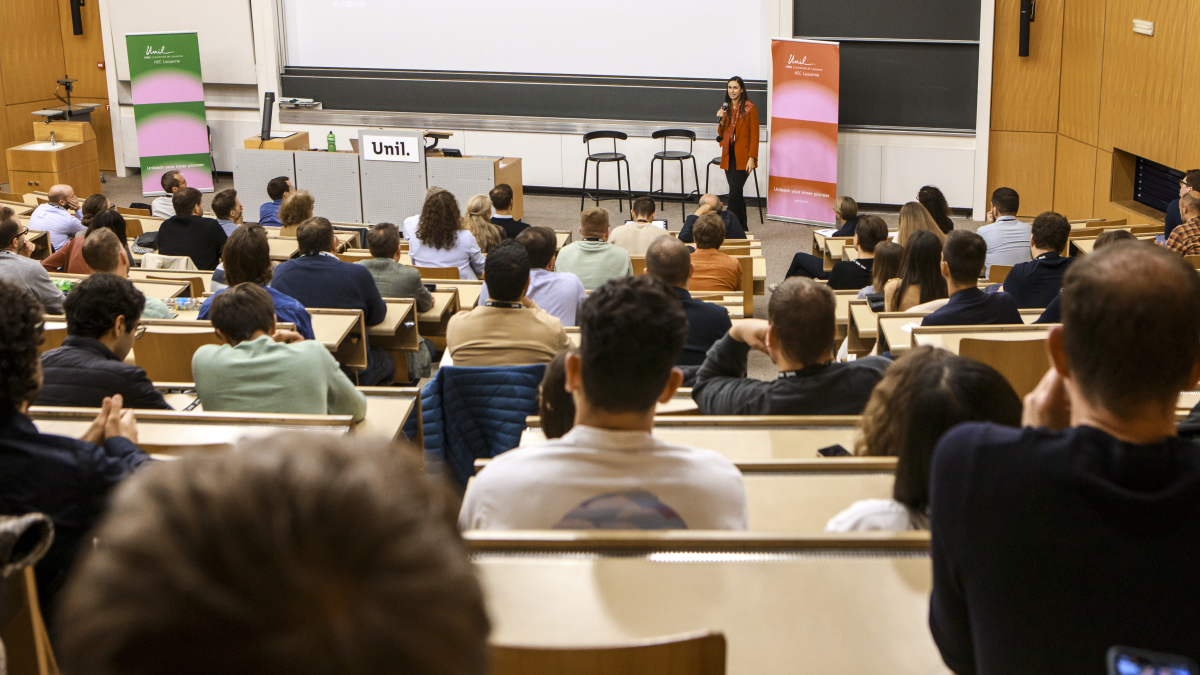
Photo: Sébastien Monachon
The Next Generation: Between Ambition and Curiosity
Two current students in the program, Alexandre Marlet and Philippe Delauney, closed the day by sharing their perspective on the master’s program. Drawn by its academic quality, international dimension, and career prospects, they described an environment that is demanding yet stimulating. “The master’s program pushes us to become digital actors, capable of connecting technology, strategy, and meaning,” Alexandre summarized.
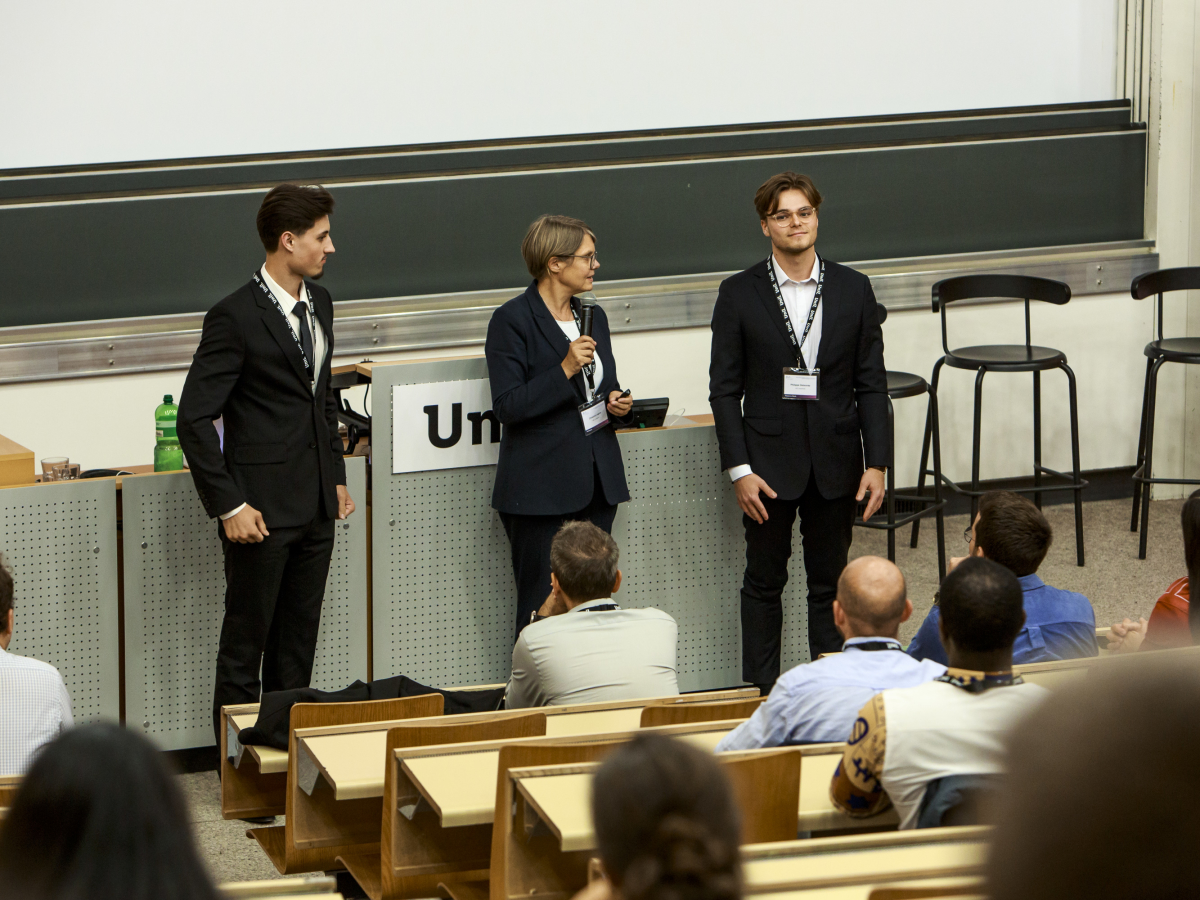
Photo: Sébastien Monachon
A Legacy Oriented Toward the Future
Over forty years, the Master’s program in Information Systems and Digital Innovation at HEC Lausanne has trained a community of more than one thousand graduates with diverse profiles.
All share the same conviction: understanding digital technology is not just about mastering technical tools—it is about understanding people.
The campus buildings may not have changed much, but the world continues to reinvent itself. And at the heart of this transformation, the master’s program continues to do what it has always done best: preparing students for a constantly evolving field.
Arno Bruderer - HEConomist
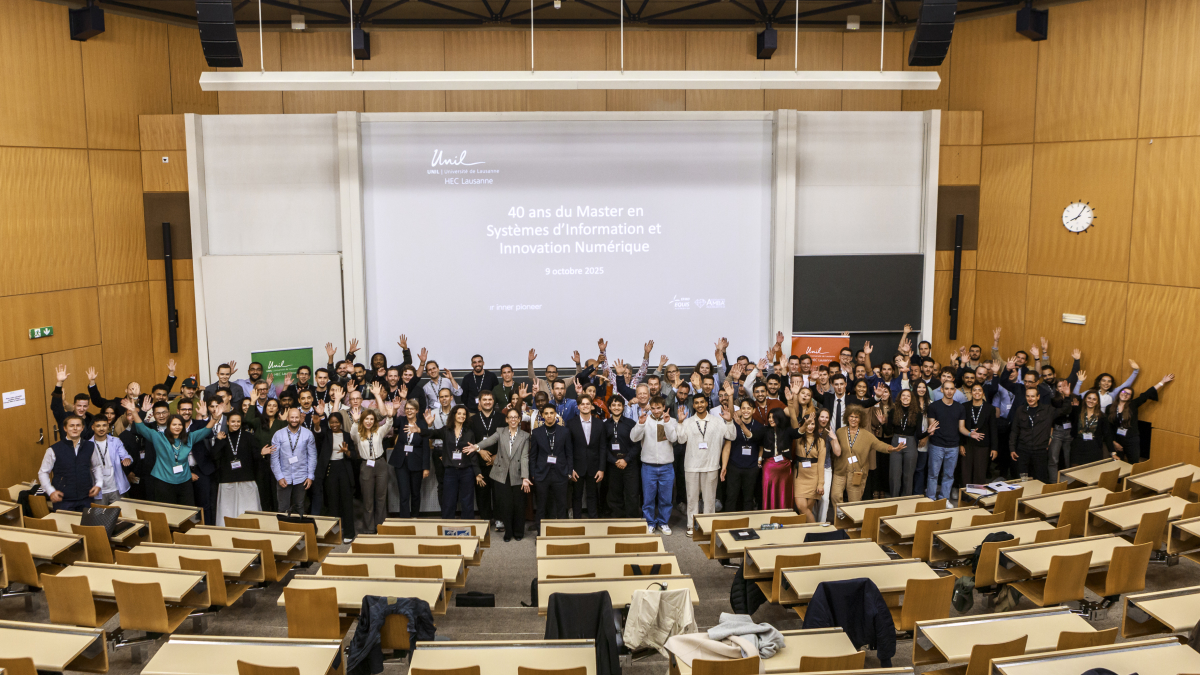
Photo: Sébastien Monachon
HEConomist
The student magazine
Read the biography